
Automatic clamping does not, by itself, confirm that a saw advances the stock to the next cutting position. Holding the workpiece and feeding it are separate jobs. When choosing a semi-automatic or automatic aluminum saw, ask which parts of the complete batch the quoted setup handles.
Automatic clamping holds; stock feeding positions
Clamping holds the workpiece for the cut. Stock feeding moves the material to the next required position. A machine description can name an automatic clamp cycle without explaining how the next length is established.
That difference matters when your buying goal is to reduce repeated positioning work. Ask how the bar reaches each new cut position, rather than relying on the word “automatic” beside one feature.
Which repeated job takes your operator’s time?
Tell Jiurun whether the main issue is holding the profile, positioning the next length or handling the complete batch.
See the two functions in Jiurun’s catalog
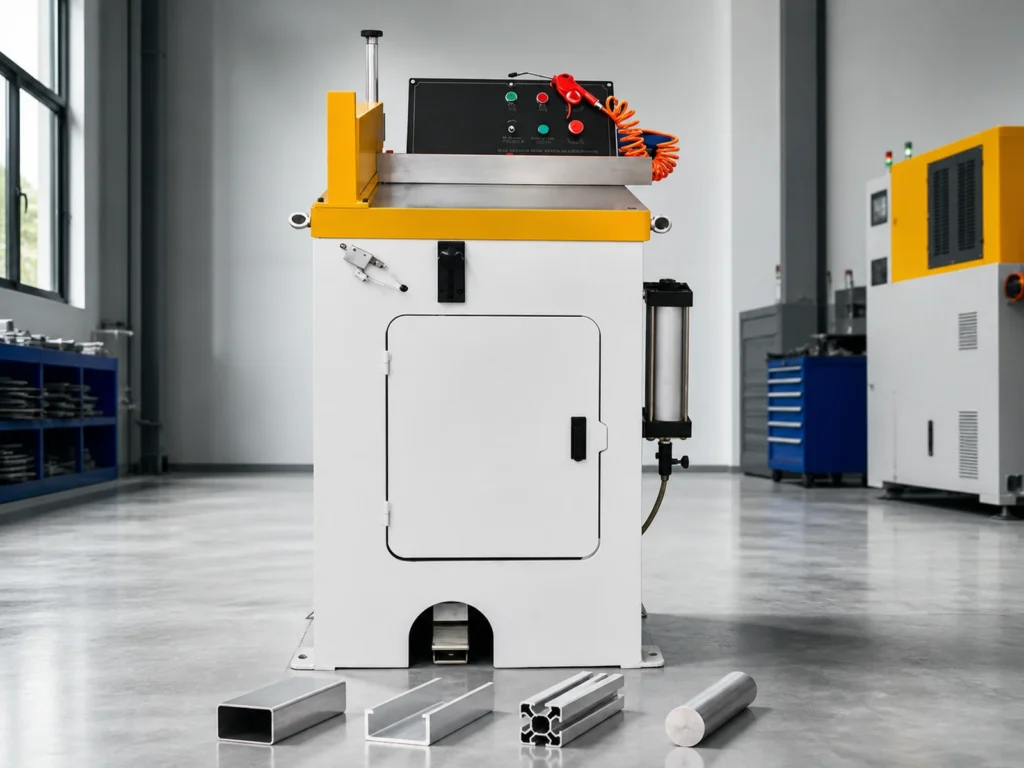
The JR-455Q semi-automatic saw description lists pedal-triggered clamping, oil spraying and cutting. Those features describe work within the cutting cycle.
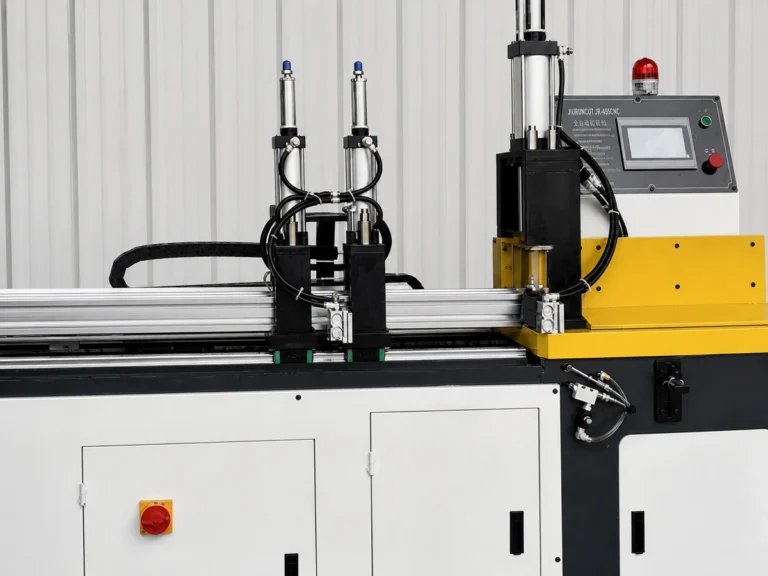
The JR-455CNC page separately names servo automatic feeding and automatic clamping. Its feeding arrangement belongs in the comparison when you need repeated stock positioning.
Use these descriptions to ask specific questions about the configuration you are considering. Which action starts the cycle? How is the next length reached? What must the operator do before the next cut? Confirm the proposed equipment and its role for your actual parts.
Follow one repeated-length job
Imagine a batch of straight pieces from one profile. During each cut, the material must be held. Between cuts, it must reach the next length position. Both tasks belong to the job, even if the brochure highlights only one of them.
Ask the supplier to describe the proposed route from the first loaded bar to the last collected piece. Identify who loads the stock, establishes the next position, starts the cut and removes the finished part. Keep those responsibilities clear when comparing offers.
A stop used to locate a length and a device that advances the stock are also different items. Our length-positioning guide explains that distinction.
Show the job between cuts
Share the incoming stock, finished lengths and normal batch so the feeding requirement is clear.
Choose around the whole batch
Clamping and feeding are useful parts of an automation discussion, but loading, collection and job changes also belong in the comparison. Tell Jiurun which manual work you want to reduce and which work your operator will continue to perform.
If the order changes profile or finished length frequently, include that mix. If the same straight job repeats, explain that too. Ask for a review of a representative job so the proposed arrangement is connected to your workshop’s work.
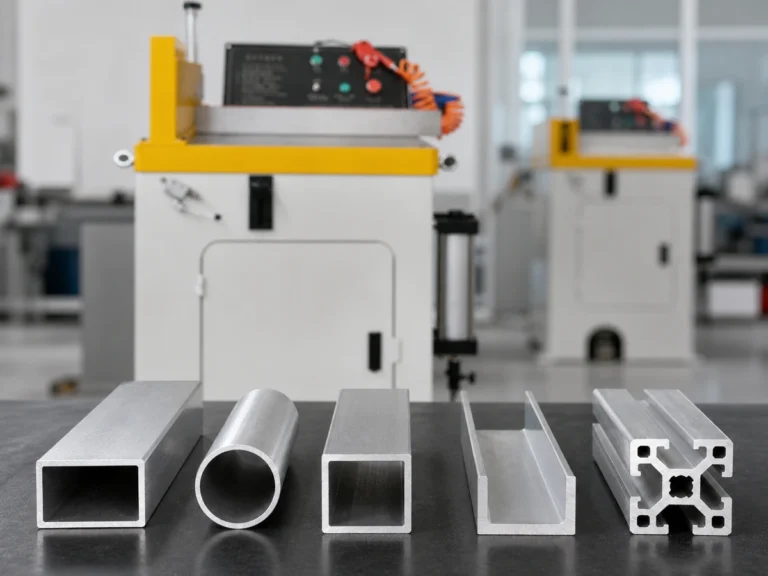
See the semi-automatic saw page and the CNC saw page as starting points. Keep the final machine choice tied to the current configuration and your parts.
Watch: Jiurun JR-455Q semi-automatic saw reference
Use this JR-455Q reference when discussing the cutting cycle and the operator’s remaining work.
Discuss automatic clamping and stock feeding with Jiurun
Describe the repeated work you want to change. Ask for the loading, positioning, cutting and collecting responsibilities to be clear in the proposal.
Catalog context: Jiurun brochure, physical PDF pages 6 and 7, through Catalog & Downloads. This guide compares the roles of clamping and stock feeding; the supplier should explain the full workflow for the configuration being quoted.