
A semi-automatic saw for aluminum and PVC profiles may suit a small workshop when the manufacturer confirms a suitable setup for each material. Jiurun’s brochure lists both materials on the page covering the JR-455Q and JR-455Y family. The buying question is whether those confirmed setups can share one machine conveniently, or whether separate equipment would better serve the work.
Three things to remember
- Ask for aluminum and PVC to be reviewed separately, using your actual profiles.
- Confirm the blade, clamping, support and material-change requirements before comparing prices.
- Check sample cuts for each material and consider how jobs compete for the same saw.
On this page
Start with your order mix
Look at a normal week of orders. Do aluminum jobs and PVC jobs arrive in separate batches, or do both need cutting throughout the day? How often would one job interrupt the other? Include urgent replacements and repeat orders, rather than judging the purchase from one demonstration.
A shared semi-automatic saw is worth considering when one operator can handle the work in planned batches and the material changes are manageable. Separate equipment deserves a closer look when both materials need cutting at the same time or frequent switching would leave customers waiting.
The JR-455Q / JR-455Y semi-automatic saw family uses operator-led loading. Discuss which model fits the cut and profile, along with the steps the operator will perform.
Could one saw cover your two materials?
Send a photo or drawing of your aluminum and PVC profiles. Tell us how often you switch between them.
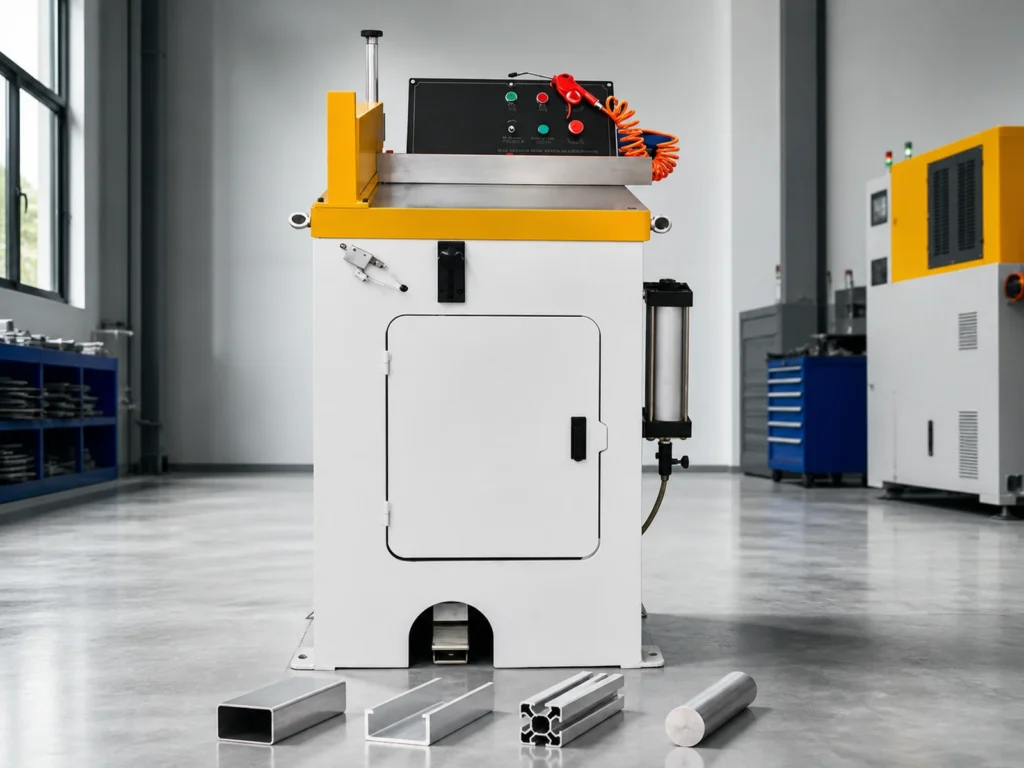
Ask for two material setups
Send the supplier the aluminum alloy or grade and the PVC material specification you use, where available. Include cross-sections, wall thicknesses, stock lengths, finished lengths and visible surfaces. A clear photo can start the conversation; mark any missing information as pending.
Request a proposal that describes the aluminum setup and the PVC setup separately. This makes it easier to see what is shared, what changes and what additional equipment is included. Ask these questions for both:
| Item | What to ask |
|---|---|
| Material approval | Is this exact machine configuration suitable for the supplied material and profile? |
| Blade | Which blade do the machine and blade manufacturers approve for each material? Can it serve both jobs, or are separate blades required? |
| Clamps and supports | Which contacts and supports are needed for each profile? |
| Lubrication | What does the manufacturer require for each material, and is the proposed lubricant compatible? |
| Chip handling and cleaning | What equipment and manufacturer-approved cleaning procedure are required when materials change? |
Have the supplier identify the blade and accessories in the quotation. A broad material list alone cannot answer these application questions.
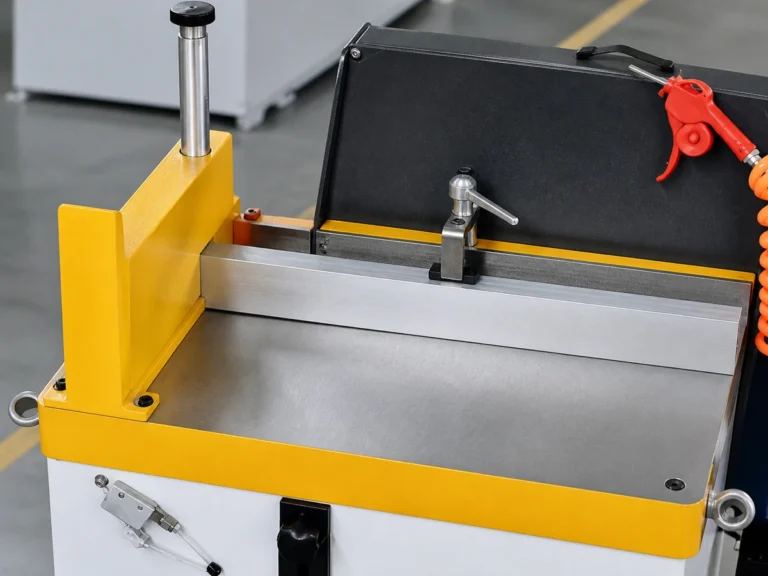
Check clamping and support
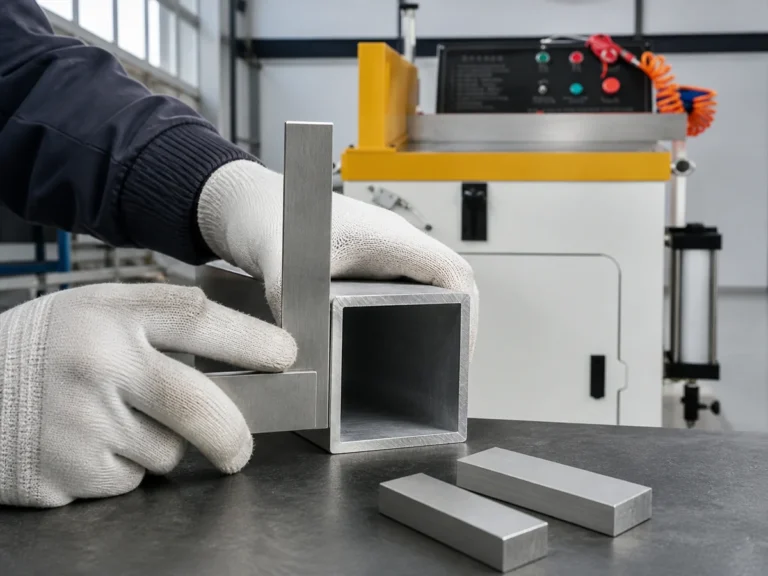
Show where the profile can rest and which faces must remain free from unacceptable marks. Ask how each shape will be held without affecting the finished part. Review thin walls, hollow sections, ribs and protective finishes on the actual samples.
Include the whole stock length and the finished piece in the support discussion. Ask whether the same supports and stops can be used for both jobs, and which fixtures or contact pieces must change. The supplier should explain the approved arrangement and operating procedure for each material.
Send both profiles for review
Share the material details, profile photos and batch quantities you have. We can discuss the proposed setups and quotation scope.
Understand what changing materials involves
Ask the supplier to describe a change from an aluminum job to a PVC job, and the return to aluminum. Identify any blade, fixture, support or lubrication changes, required cleaning, and checks before the next batch starts.
Use that description to judge the workload for your workshop. Who is trained to make the change? Where will approved blades and fixtures be kept? Does the quotation include the equipment and instruction needed for both setups?
For wider questions about switching profile jobs, see our aluminum profile cutting changeover checklist.
Watch: JR-455Q semi-automatic saw
JR-455Q semi-automatic cutting cycle from the Jiurun machinery channel. Discuss the setup required for your own materials.
Check aluminum and PVC samples separately
If sample cutting is agreed, provide representative profiles from both materials. Agree what an acceptable finished part looks like before the trial. Keep the material, drawing and setup details with the results so each sample is easy to identify.
Check finished length, end geometry, the cut face, edges and any clamp marks against the requirements for that part. Include a fit or assembly check when the cut end must meet another component. Ask to review a sequence of parts from each setup, rather than selecting one attractive sample.
An aluminum result answers the aluminum question. PVC needs its own check. If the same blade or fixture is proposed for both, include that shared arrangement in the agreed trial. Our sample-cutting trial checklist explains how to organize the evidence.
One machine or separate equipment?
Compare the two options using the confirmed material setups and your order mix:
- One shared machine: consider it when both materials are approved, the trials meet your requirements and jobs can be grouped without disruptive switching.
- Separate equipment: consider it when overlapping orders, repeated setup changes or different handling needs make sharing awkward.
Compare the complete purchase scope, including blades, fixtures, supports, chip-handling equipment and training. Also consider space and who will load, inspect and maintain each machine. The lower machine price may not be the most practical option if the proposed workflow cannot keep up with your actual jobs.
Which arrangement fits your workshop?
Tell JiurunCut what you cut in aluminum and PVC, how often the materials change and what you want to improve. Start with the details you have.
Semi-automatic saw for aluminum and PVC: buyer questions
Does a materials list mean I can leave the setup unchanged?
No. Ask the manufacturer to confirm the blade, support, clamping and other requirements for each material and profile.
Should I buy two saws straight away?
Compare the confirmed setups with your order mix first. Separate equipment is worth reviewing when both materials need cutting at the same time or switching repeatedly would disrupt work.
Can I start without complete drawings?
Yes. Send clear photos and the material details you know. The missing dimensions and finished-part requirements can be clarified before choosing a configuration.
Sources and scope
Material-list reference: Jiurun machinery brochure, physical PDF page 6 (printed page 5), available through Catalog & Downloads. Model and workflow context: the JR-455Q / JR-455Y product page. Confirm the exact material setups with the manufacturer; this guide provides buying questions rather than cutting instructions.