
Konig vs Persoz identifies two pendulum methods used in coating assessment. Keep the named pendulum and reported quantity beside each result. Two matching numbers with different method labels do not establish equivalent coating evidence.
Konig is the ASCII spelling used here for König. For coated aluminum orders, preserve the spelling and method designation from the actual laboratory report so the receiving team can identify the test.
On this page
Check 1: read Konig vs Persoz as method identities
BYK-Gardner’s Pendulum Hardness Test white paper explains the assessment using an oscillating pendulum resting on two contact balls at the coating surface. The observed amplitude decreases, and the report records the defined damping time or oscillation count.
The paper distinguishes König and Persoz pendulums by their constructions and measurement parameters. It states that results from the two methods are not directly comparable because the pendulum and coating interact differently.
A purchasing comparison should therefore retain the method identity. Ask the finisher or laboratory to name the actual pendulum and applicable method edition with the result.
If the order requires one method and the proposed report uses the other, keep that difference visible. Have the responsible technical reviewer assess the proposed change before recording compliance.
Do not treat the two names as interchangeable labels for one shared numeric scale. An unexplained hardness heading leaves the required comparison unresolved.
Use the complete applicable procedure through the laboratory for execution. This article explains how to read a report and does not supply instrument angles, contact geometry or operating settings.
Check 2: preserve the reported quantity
Read the full result heading. Determine whether the entry reports elapsed damping time, a number of oscillations or another explicitly defined output.
A value in seconds describes a duration. An oscillation count describes a count. Keep those labels beside the numbers in the quotation comparison and receiving record.
If a supplier’s summary removes the label, obtain the complete laboratory entry. Avoid filling the missing unit from another report that happens to use the same method name.
A calculation also needs its applicable basis. Do not invent an oscillation period to convert a count into seconds or use a conversion from another pendulum.
Keep the laboratory’s reporting convention intact. If a derived entry is provided, ask the issuer to identify its basis and retain the original result with it.
Our pencil-hardness report guide addresses a separate coating assessment. A pencil designation belongs to its own method; it should not become a pendulum time or count in a receiving spreadsheet.
Matching numbers in three fictional summaries
Imagine original finish file K27. Three shorthand entries contain the number 80. The entries below are invented to show why the headings matter; they are not actual coating results or acceptance limits.
| Summary entry | Meaning to preserve |
|---|---|
| A: König, 80 seconds | A stated duration under the identified method. |
| B: Persoz, 80 seconds | A duration under a different identified method. |
| C: König, 80 oscillations | A count, with no duration supplied in this example. |
A and B share a numerical value and unit while their method identities differ. C shares A’s pendulum name while reporting a different quantity.
The receiving team preserves all three original labels. It asks the issuer for the complete reports and the relationship to the order rather than declaring three equivalent passing results.
The example provides no method conversion or ranking of the hypothetical coatings. In an actual file, the responsible reviewer needs the complete method and specimen information to evaluate the evidence.
If the purchaser’s spreadsheet has only one hardness column, add the missing method and quantity fields. The revised format should make the difference visible without changing any issued result.
Check 3: connect the result to the coated specimen
BYK identifies substrate, coating thickness, temperature and humidity as relevant conditions for comparable pendulum results. Its discussion also identifies specimen coating condition and preparation as part of the assessment.
For an aluminum order, retain the substrate and coating-system identities with the specimen reference. Ask whether the report concerns a delivered part or a separately prepared panel.
If a panel represents production, request its documented relationship to the supplied finish. A photograph of a similarly colored part does not provide that connection.
Record the evaluation stage required by the order. Keep the relevant coating preparation and test-condition information supplied by the laboratory with its result.
The powder-coating thickness guide addresses the separate measured-film requirement. Retain that result under its own quantity, method and sampling locations.
If two reports use different substrates or coating conditions, list the difference for review. Using one pendulum method still leaves the specimen comparison to be established.
Ask the issuer to clarify a missing reference and preserve its reply as an identifiable record. Avoid relabelling an unknown panel as the supplied batch to complete the file.
Use the requirement actually agreed for the order
Find the coating requirement in the released specification or inspection plan. Identify the required method, sample scope and reported result before comparing it with the evidence.
When a criterion is missing, ask the project’s responsible quality or engineering team to define it. This article supplies no universal passing time or oscillation count for coated aluminum.
Keep the laboratory result separate from the purchaser’s acceptance decision. Record which requirement the reviewed report answers and any remaining issue.
Other finish requirements may include appearance, adhesion or protected assembly features. Give each agreed requirement its own evidence rather than extending a pendulum result to every property of the coating.
Do not treat a coating result as an indentation-hardness measurement for the aluminum substrate. Preserve the tested subject and its method in each field.
Keep the aluminum cutting and finishing handoff clear
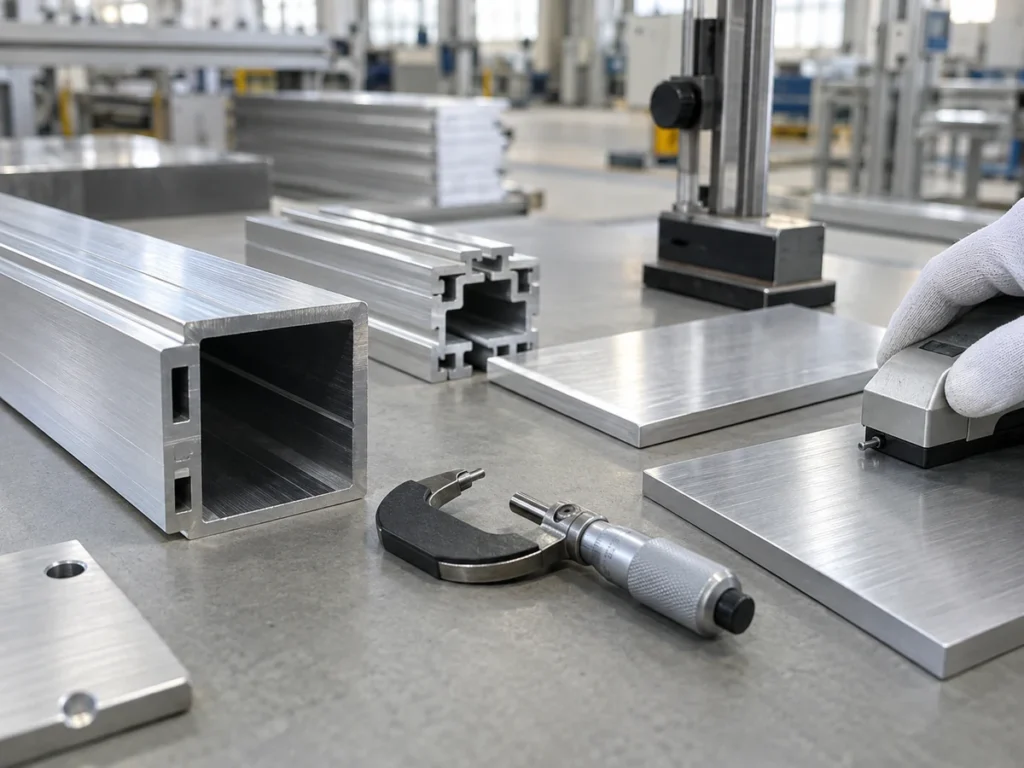
For blanks that will be coated, provide the approved drawing, stock description, cut lengths and quantities. Identify visible surfaces and any sample identity that must travel to the finishing team.
Have the finisher or laboratory define the required test sample and its production relationship. Keep those instructions with the order instead of selecting an unlabelled offcut as a substitute.
Retain the delivered blank stage and its separate dimensional checks. The cutting record and the coating assessment should remain individually traceable.
Please identify the pendulum method and result quantity for finish file K27. Supply the complete report, coated-specimen reference and relevant conditions, and explain how the record addresses the agreed requirement.
This is original wording for the fictional example. Use the actual order and report identifiers in a real clarification.
Send JiurunCut your aluminum blank and cutting requirements. Include downstream finish instructions that affect the supplied blank and keep coating evaluation with its appointed reviewer.
Questions about Konig vs Persoz
Can equal seconds be compared directly between the two methods?
The cited manufacturer cautions against direct comparison. Preserve the method and obtain the responsible review.
Is an oscillation count automatically a duration?
Keep its count label. A duration needs its stated reporting or conversion basis.
Does one pendulum result qualify every finish property?
Review it against the actual requirement. Keep other coating assessments individually identified.
What should a vague hardness entry become?
A complete method-labelled result connected to the coated specimen and its supporting report.