
Static vs dynamic balancing is a question about the unbalance being assessed and the scope of the report. A static assessment alone does not establish the absence of couple unbalance. Ask which rotor, arrangement and requirement the supplier has evaluated.
For aluminum-cutting equipment, a component certificate may arrive with a tooling quotation, assembled unit or service reply. The useful first action is to read its exact scope before adding “balanced” to the equipment acceptance record.
On this page
The distinction behind static vs dynamic balancing
Schenck’s SmartBalancer 4 manual, section 6.2.3, explains static and couple unbalance. Its static example places added mass in the center-of-gravity plane.
Its couple example uses equal, opposite unbalances in two separated radial planes. The center of gravity remains on the rotation axis, so the illustrated static rolling assessment does not reveal the couple. The manual describes detecting and correcting this dynamically through two-plane balancing.
The manual also describes combined unbalance and explains that the available correction planes and their separation matter to the one-plane or two-plane decision. Its method discussion concerns rotors that behave rigidly in the relevant speed range.
These explanations help you read the supplier’s terminology. They do not assign a balancing method, correction plane or acceptance grade to an unidentified saw blade or machine component.
Ask what the seller means by “static balanced,” “dynamic balanced” or simply “balanced.” Preserve its actual definition and the documented assessment. The wording on an invoice should not silently expand the scope of the supporting report.
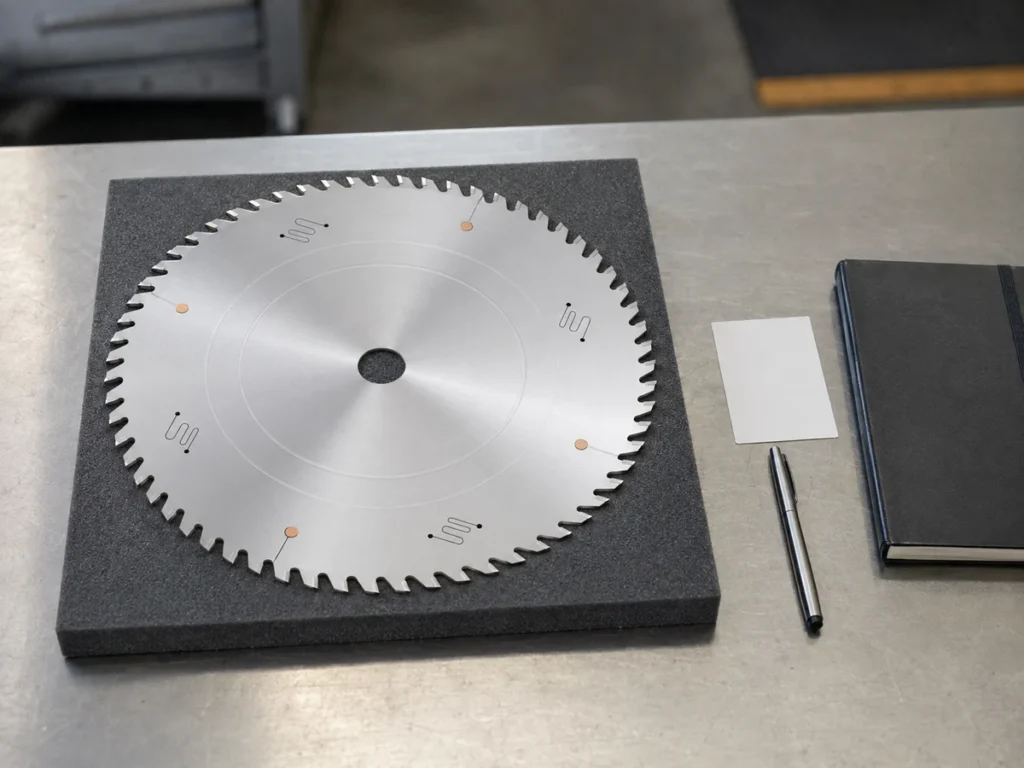
Check 1: identify exactly what was supplied and assessed
Begin with the part reference and drawing revision. For a tooling item, keep the manufacturer’s full product identity. For a supplied assembly, identify its included components and configuration.
Ask whether the balancing record concerns a separate component or a defined assembled rotor. Keep the answer beside the item’s serial or batch identity. A certificate for one object does not automatically become a certificate for another.
Read any statements about included and excluded items. If a quotation includes several components but the report identifies only one, ask the supplier to explain the complete supply scope and the evidence promised for it.
For an aluminum component that will receive further machining or assembly, record its supplied stage. Identify which condition the certificate describes and what remains to be done. Ask the responsible supplier whether the final delivery requirement needs another assessment.
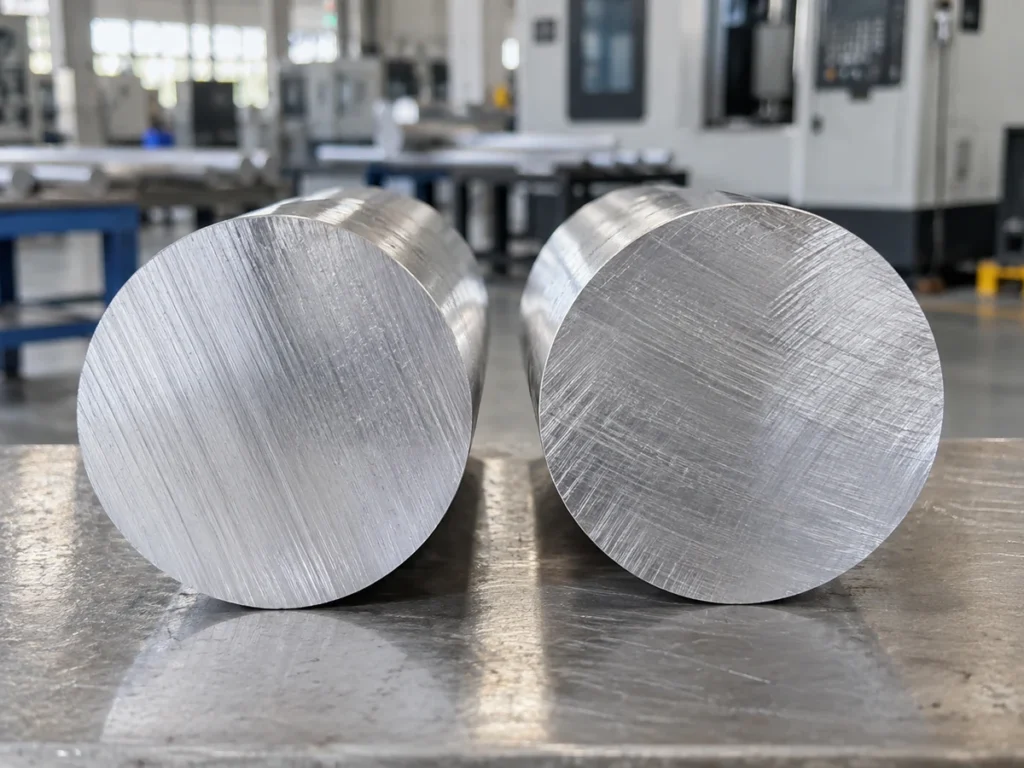
Do not infer a finished rotor configuration from raw-stock dimensions. A drawing of a solid aluminum bar or an unfinished housing is a different document from a report for a defined rotating assembly.
Retain the original certificate file. A copied spreadsheet entry saying “passed” should link back to the item and report from which it came. This makes the purchasing record readable when the receiving team has not seen the quotation discussion.
Check 2: keep the measured result and method scope together
Ask the supplier to identify the assessment method, relevant planes, test arrangement and reported quantity. Preserve each result’s unit and the applicable acceptance requirement. An unexplained number beside “balance” gives the receiving team too little information.
Keep the relevant rotor condition and stated speed information with the report. Ask the assessor to explain which information defines the requirement and which describes the measurement arrangement. Avoid combining entries from different certificates into one undocumented result.
For a two-plane record, retain the plane labels that connect each entry to the documented object. A summary that drops those labels can obscure what the results actually cover.
Request the equipment and measurement references needed for the agreed report. Schenck’s test-laboratory page lists geometry, mass, unbalance, rotational speed and vibration velocity as distinct measured quantities.
Keep balance evidence separate from a dimensional inspection. Our saw blade runout guide explains how to identify the measured feature and reference for that separate report.
A certificate should say what was assessed, which requirement applies and what conclusion was reached. Do not convert an unlabelled balance entry into a runout limit or a cutting-accuracy claim.
If the purpose is to investigate a machine observation, describe the observation separately. Schenck’s manual calls for establishing whether the cause of reduced running smoothness is actually unbalance before balancing. A buyer’s symptom description is not a completed diagnosis.
Inspection and corrective work belong with qualified personnel using the actual equipment documentation. This article contains no rotor correction, trial-weight placement or live-running inspection instructions.

Check 3: connect the report to the agreed acceptance scope
Read the purchase specification alongside the certificate. Check that both identify the same supplied item and condition. Keep the requirement revision visible so a later change is not lost in an older quotation attachment.
If the supplier quotes a balance grade, request its full reference and the applicable basis. Let the responsible designer or tooling supplier confirm the requirement for the actual component. This guide provides no universal grade for aluminum saws.
Identify who reviews the report and who releases the delivery. A component assessment and a complete machine acceptance review have different objects and responsibilities.
Keep any unresolved information in the receiving record. For example, a missing assembly identity should remain an open question until the supplier connects the certificate to the delivered scope.
For subsequent service, preserve the report and the approved configuration. The machine-service guide explains how to describe the work requested and retain the supplier’s response.
A fictional certificate review
Imagine an invented quotation for an assembled rotor. The attachment says “static balance accepted,” but it identifies a loose component and provides no statement about the assembled item. The purchase brief requests evidence for the supplied assembly.
The useful response is to request the missing connection: which object was assessed, which unbalance and requirement the assessment covers, and how that report addresses the assembly in the quotation.
| Received information | Clarification needed |
|---|---|
| A loose component is named. | Which evidence covers the quoted assembled rotor? |
| Static balance is mentioned. | Which assessment satisfies the approved assembly requirement? |
The example supplies no real test result and selects no balancing method. It shows why an acceptance word cannot repair a mismatch between a certificate’s object and the purchased item.
Questions buyers ask
Does a static assessment prove there is no couple unbalance?
Read the method scope. The cited manual’s couple example is not revealed by its static rolling assessment.
Must every component be balanced in two planes?
Have the responsible supplier confirm the method for the defined rotor and requirement. Do not select it from a generic label.
Is a runout reading a balance certificate?
Keep the reported quantity and purpose explicit. Request the evidence specified for each separate requirement.
Keep component evidence clear in your machine inquiry
Send JiurunCut the aluminum sections and cutting workflow you need. If static vs dynamic balancing enters the proposed scope, ask which actual component and assessment the supplier’s response covers.