
Motor efficiency vs power factor compares two different ratios. Motor efficiency relates shaft output to electrical input power. Power factor relates electrical active power to electrical apparent power. One value cannot be substituted for the other when reviewing an aluminum saw proposal.
Keep three power fields clearly labeled: mechanical output in kW, electrical active input in kW and electrical apparent input in kVA. Then ask which component and operating condition each value describes.
On this page
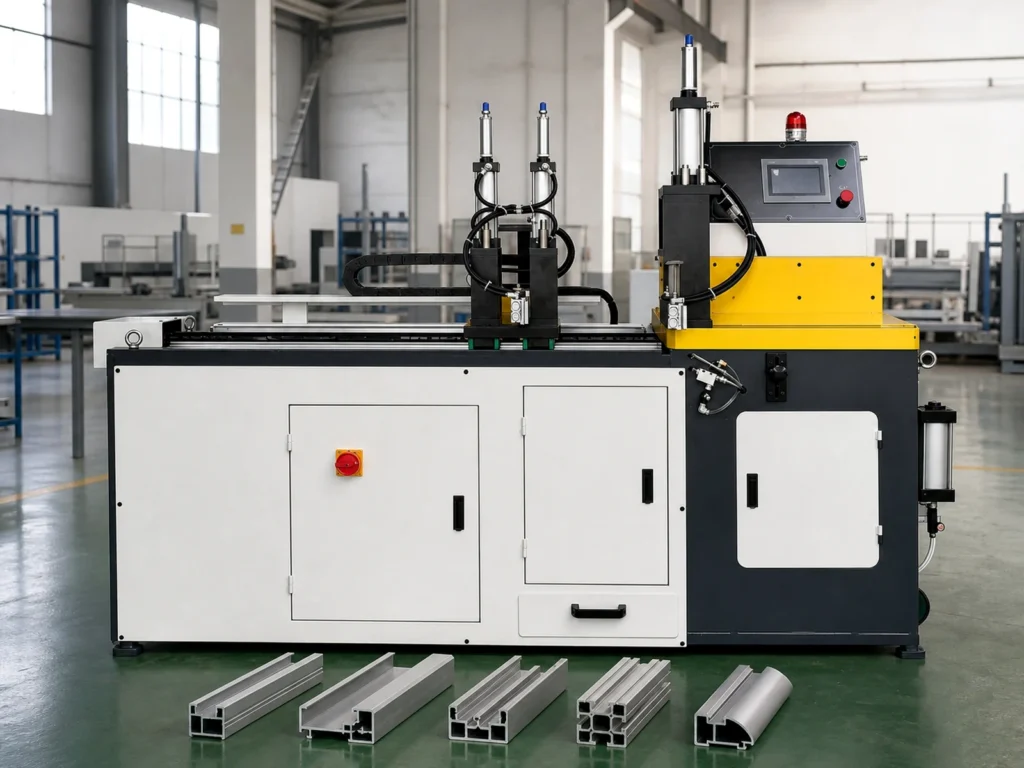
Motor efficiency vs power factor: read the two ratios separately
Section 1.2.6 of WEG’s Specification of Electric Motors defines efficiency through the ratio of mechanical output at the shaft to electrical input absorbed from the supply. Keep both sides of that comparison at the same motor boundary.
For efficiency written as a fraction, the reading relationship is: shaft output kW ÷ electrical active input kW. A percentage expresses that fraction multiplied by 100. A rated motor figure should retain the associated documentation and conditions.
Schneider Electric’s Electrical Installation Guide defines power factor as active power P in kW divided by apparent power S in kVA. This comparison stays on the electrical-input side; it does not use the motor’s shaft output as its numerator.
Read the field names rather than deciding from the unit alone. Both shaft output and active electrical input can be stated in kW. The accompanying label tells the buyer which value is being discussed.
Likewise, a statement of kVA is not a second name for the shaft output. Ask the supplier to identify its measurement or rating boundary. A quotation should not leave the buyer to guess whether the entry belongs to a motor, a drive arrangement or a complete machine.
One fictional example: 9 kW, 10 kW and 12.5 kVA
Assume an invented motor operating point has 9.0 kW of shaft output, 10.0 kW of active electrical input and 12.5 kVA of apparent electrical input. These are hypothetical teaching inputs, not ratings or measurements for a JiurunCut machine.
The efficiency calculation is 9.0 ÷ 10.0 = 0.90, or 90%. The power-factor calculation is 10.0 ÷ 12.5 = 0.80. Both ratios use the same assumed operating point, but they compare different quantities.
| Fictional quantity | Meaning in this example |
|---|---|
| 9.0 kW output | Mechanical power at the motor shaft. |
| 10.0 kW input | Active electrical power entering the motor boundary. |
| 12.5 kVA input | Apparent electrical power at that input. |
| 90% and 0.80 | Efficiency and power factor, respectively. |
The arithmetic difference between the assumed active input and shaft output is 10.0 − 9.0 = 1.0 kW. The separate difference between the written kVA and kW values must not be labeled as that motor-loss figure.
Keep the assumptions beside the example. It excludes additional equipment and provides no supply current, protection selection, installation rating, cutting output or electricity-cost prediction.

Why 0.80 power factor does not mean 20% motor loss
In the fictional example, power factor is 0.80 while efficiency is 90%. Calling the motor “80% efficient” would use the wrong ratio. The missing distinction is the mechanical-output field.
Similarly, do not turn a proposed change in power factor into an equal percentage change in active electricity use. A supplier’s claim needs a named quantity, operating condition and comparison basis.
For a second purely arithmetic illustration, keep the invented active input at 10.0 kW. At an assumed power factor of 0.80, apparent input is 10.0 ÷ 0.80 = 12.5 kVA. At an assumed power factor of 0.90, it is 10.0 ÷ 0.90 ≈ 11.11 kVA.
The assumed active input remains 10.0 kW in both calculations. The illustration changes the apparent-power figure under the stated assumptions; it does not demonstrate an energy saving or propose a physical modification.
If an offer promises a reduction, ask what decreases: active input, apparent demand, operating energy or another specified quantity. Request the evidence for the actual quoted system before treating a general improvement claim as a result.
Keep the operating condition attached to the data
Identify the motor reference and the documentation behind each entry. Keep the stated supply conditions, loading basis and relevant test or rating information together. Do not combine a percentage from one table row with a power value from another unexplained condition.
For a comparison between two quotations, ask each supplier to explain the same proposed operating task. Include the intended production pattern and the actual configuration being offered. The purpose is to compare described evidence, not to create missing data through assumptions.
Keep rated data, an engineering estimate and a measurement record separately labeled. A measured result should identify what was measured and under which agreed conditions. An estimate should state its inputs and scope.
Do not use a demonstration of the machine running as proof of the two ratios. Request the required documentation or evaluation through the responsible technical team. A general video can show a sequence without supplying the electrical and mechanical quantities needed here.
Our IE2 versus IE3 motor guide addresses efficiency classification. The class is another field to read with the identified motor data; it does not replace the separate power-factor entry.
Separate motor data from whole-machine evidence
Make the equipment boundary visible. A motor datasheet, a motor-and-drive description and the complete aluminum saw are different scopes. Identify accessories and independently supplied equipment that the purchasing review must include.
For destination-site planning, obtain the complete manufacturer requirements and arrange review with qualified site personnel. The power-supply quotation checklist organizes those documents. The fictional ratios above do not size a cable, protective device or site supply.
If whole-machine energy is part of the comparison, define the representative job and the measurement boundary. Name what equipment is included, the observed operating period and the production record used. A motor ratio alone does not report the complete task’s electricity use.
Keep accepted finished parts identifiable when comparing production evidence. An electrical figure and a part-inspection result answer different questions. Neither should become a substitute for the other in the acceptance package.
A concise inquiry can ask: identify the offered motor, define each power field, attach the relevant conditions, and explain the scope of any whole-machine consumption claim. Mark unavailable data as unresolved instead of filling the fields with an assumed standard value.
Send JiurunCut your aluminum section drawing and production requirements to discuss a cutting proposal. Include the configuration information and site-review documents you need. Request values supported by the actual offered arrangement.
Buyer questions
Is power factor another word for motor efficiency?
No. The two ratios have different numerators and denominators. Keep the fields separately named in the quotation.
Can kW alone tell me whether a figure is input or output?
No. Read the accompanying quantity label and equipment boundary.
Does a lower calculated kVA prove lower active energy use?
It does not establish that claim. Identify the actual energy comparison and its evidence for the intended operating task.
What should I ask before comparing proposals?
For motor efficiency vs power factor, request the identified data, operating conditions and equipment scope. Then compare the same clearly defined quantities.