
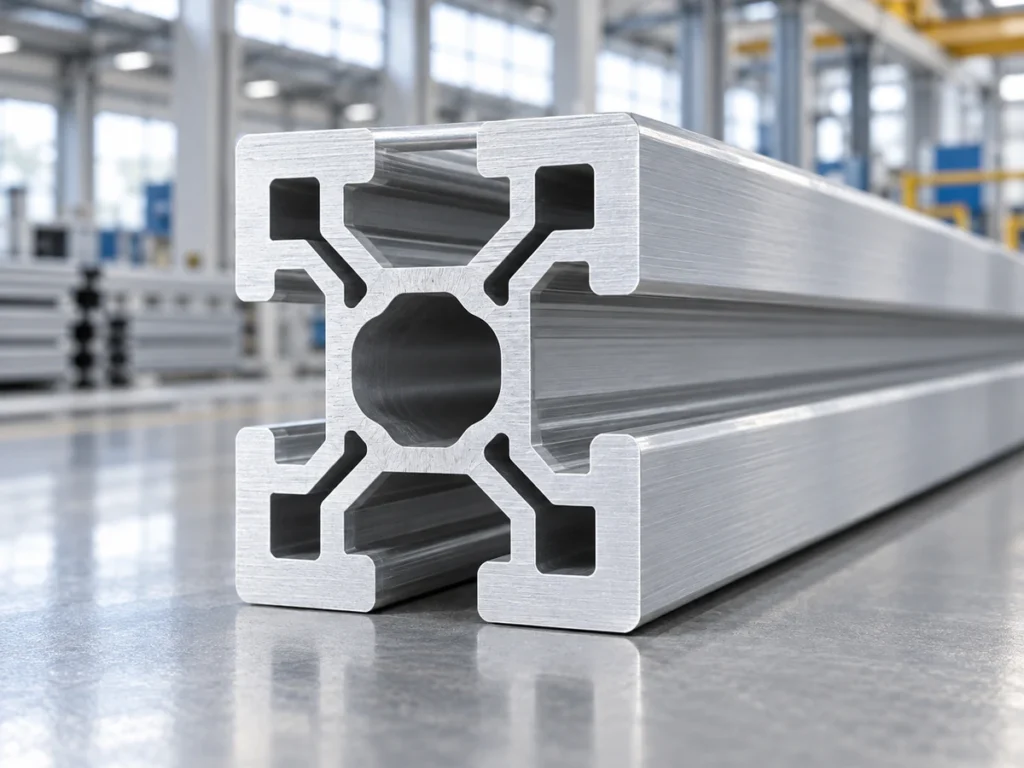
Aluminum extrusion end tapping needs its own order requirements alongside the saw-cut length. Identify the profile, thread designation, selected end and hole count. State the required thread depth and supplied stage from the approved drawing. A cut extrusion with a visible center opening is not evidence that the opening has already been threaded.
This guide helps purchasing teams separate a cut blank from an end-tapped component. It focuses on four order checks and a simple operation-count example. The responsible design and machining teams must confirm the actual feature requirements; the article does not choose a thread, engagement length, tool or joint load rating.
Keep three quantities separate
- Number of cut profile pieces.
- Number of selected ends on each piece.
- Number of tapped holes on each selected end.
On this page
Aluminum extrusion end tapping: define the complete thread
Start with the approved profile and mating-component drawings. Copy the complete thread requirement into the machining order, including the specified system and any required tolerance information. Do not shorten it to a number that leaves the thread identity open.
80/20’s 20-2020 product configurator provides a useful real example: its end-tap options include M5 × 0.80 and 10-32. They appear as separate services. That is a product-specific ordering example, not permission to use either thread in a different profile or assembly.
When a quotation proposes a different thread, send the change to the responsible design owner. Keep the approved revision with the order. A supplier’s available tool or a familiar screw size does not replace the component requirement.
Identify the fastener and connector references that the thread belongs to. If the thread requirement is missing, leave it as an open drawing question. Procurement can gather the necessary documents without deciding the joint design.
Check 2: the selected ends and hole count
Define end A and end B in a controlled part view. Show which end receives the operation and identify each intended hole in the section view. “Tap both sides” can be unclear if a profile has several openings or later features that distinguish its ends.
Keep the hole count attached to each selected end. One processed end does not necessarily mean one hole. 80/20’s 1020 configurator offers a two-hole end-tap service and separate left and right selections. The ordering fields show why the end selection and hole count need separate attention.
Use the supplier’s view convention when completing its order form, then relate it to your component drawing. A left/right label on a website should be read together with its displayed orientation. Do not assume it matches an unexplained left/right note in your cut list.
For a mixed batch, give each operation pattern a separate row or part identity. A piece with only end A processed should not share an undifferentiated quantity with a piece processed at both ends. Retain the revision that defines the difference.
Check 3: the defined thread requirement and acceptance
State the required thread depth using the drawing’s feature definition. Include the applicable measurement reference and acceptance requirement. If the drawing uses several depth fields, ask the responsible reviewer to confirm which one controls the accepted thread.
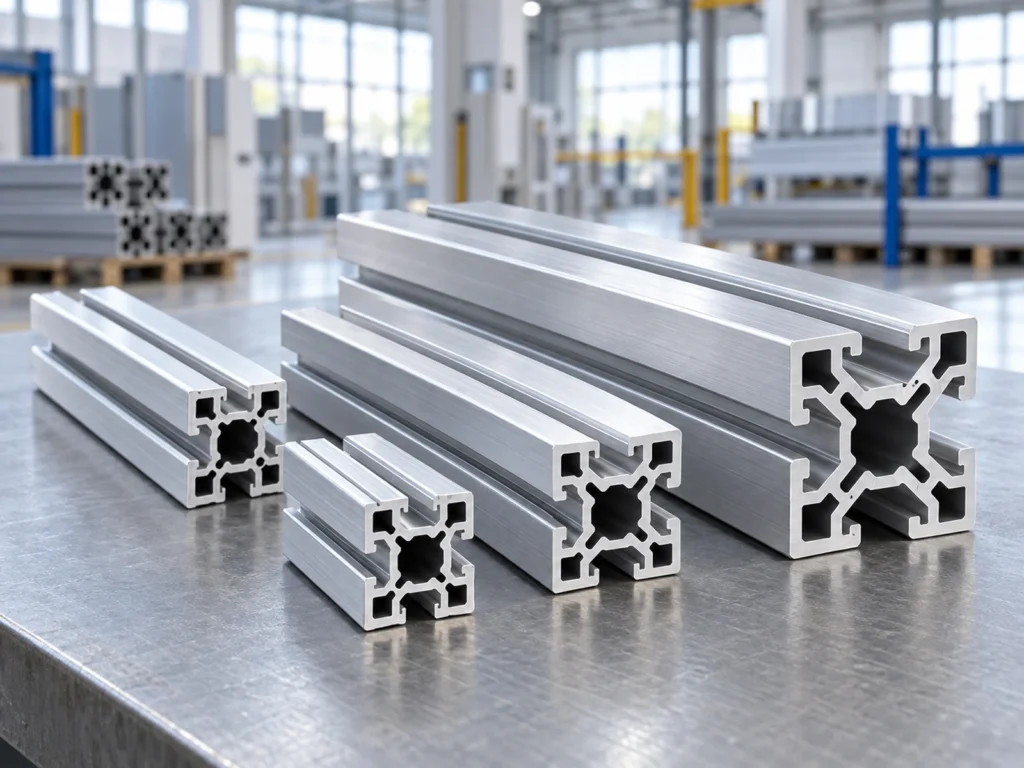
Keep the thread requirement separate from the overall profile length. A long opening through the extrusion does not mean that its full length is threaded. The supplied component needs the specific operation and acceptance called out in the machining documents.
Ask the machining supplier to identify any preparation needed for the actual section. The reviewed profile and drawing should determine the scope. Do not approve an operation from the diameter that appears to be visible in a generic image.
If a sample check is required, record the feature identity, approved drawing revision, supplied condition and agreed inspection reference. Keep a sample’s appearance separate from its measured or checked result. Our inspection-gauge guide explains the need to match a checking method to a defined requirement.
Any specified cleaning, edge treatment or finish condition also needs an owner. Avoid a broad statement such as “assembly ready” unless the supplier and buyer agree which component checks and processing steps that statement covers.
Check 4: the operations required on the mating part
Read the connector documentation for both members of the joint. An end-tapped profile may require a separately processed mating profile. Keep those features visible in the bill of materials and the operation list.
For example, 80/20’s 3344 double end fastener calls for an end-tap service on the mounting profile and two access holes on the mating profile to reach the screw heads. That is a requirement for the identified connector; it does not apply automatically to every extrusion joint.
An access hole is a separate feature from the end thread. Assign its part, position and operation to the relevant drawing. Confirm whether the quotation includes both members’ processing or only the end-tapped piece.
Keep end tapping separate from a nut placed in an external slot. Our T-slot nut compatibility guide addresses the slot-and-nut interface. The approved connector determines which features the actual assembly needs.
A fictional operation-count example
Consider fictional frame member T18, revision C. The order covers 12 cut pieces. Its approved operation list specifies two tapped holes at end A and two at end B on every piece. These invented quantities explain purchasing records; they do not specify a suitable thread or a real assembly.
| Fictional order item | Separate quantity |
|---|---|
| Profile pieces | 12 accepted cut pieces required. |
| Selected ends per piece | 2: end A and end B. |
| Holes per selected end | 2 identified holes. |
| Planned hole operations | 12 × 2 × 2 = 48 end-tap hole operations. |
The 48-operation count is not the number of profile pieces, accepted threads or complete frames. The final accepted quantities depend on the agreed checks. If only end A is required, the same 12-piece order would call for 24 hole operations in this fictional two-hole pattern.
The arithmetic also does not establish how the supplier charges the work. A quotation may group a service by end or by another stated unit. Ask for the quoted unit and included pattern instead of assuming that a hole count determines the commercial price.
Agree the supplied stage before comparing quotes
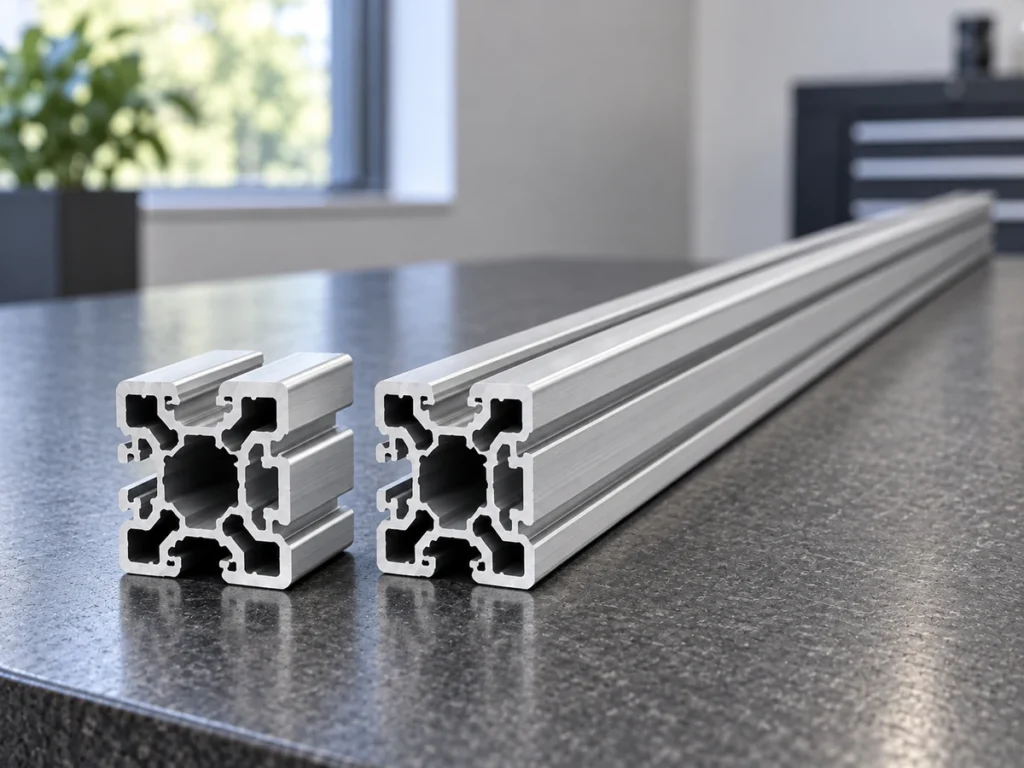
Choose a clear delivery description: cut blanks, end-tapped components, fully processed members or assembly kits. List the included operations. Identify who supplies any remaining machining, connectors, cleaning or assembly inspection.
Keep accepted cut length and end features as separate requirements. A length check does not establish that the selected ends have the required threads. An operation-complete label should refer to the applicable drawing and supplied stage.
For a kit, keep mating members and hardware identified separately. Confirm the accepted component counts before calculating the ready-kit quantity. A box with enough screws does not establish that the right profiles and operation patterns are present.
Prepare the cutting and machining handoff
Send the section drawing, material condition, finished-length requirements, thread callouts, end identities and quantity. Add the relevant connector references and mating-part drawings. Mark any open design question so it cannot be mistaken for an approved instruction.
Our cutting and drilling guide covers how to assign separate processing stages. Use JiurunCut’s contact page to request a cutting review, and ask the proposed supplier to confirm whether any later machining is within its offered scope.
Do not assume that a cutting machine quote includes tapping equipment or a qualified joint. Keep each supplier’s actual scope and any remaining work explicit. A useful response identifies the confirmed operations and the information still needed.
Buyer questions
Is a visible center opening already threaded?
The image does not establish that. Check the component drawing, supplied-stage record and required feature evidence.
Does one tapped end always mean one hole?
No. Identify the hole pattern and count on each selected end of the actual profile.
Does an end-tap requirement include access holes?
Read the specific connector and mating-part documentation. Access holes are separate operations that need their own scope and references.
Does this guide choose the thread depth or joint rating?
No. Those requirements belong to the responsible design and machining review. The guide organizes the information needed to order and check the component.